The fabric layers on early Hawker Hurricane planes allowed for rapid, low-skill field repairs and let high-velocity enemy shells pass straight through without detonating.
Combat and Repair Advantages
Shell pass-through
Low-resistance fabric meant that some explosive cannon rounds from enemy fighters went in one side and out the other without hitting enough solid resistance to trigger their fuses.
Easy patching
Ground crews could fix bullet holes quickly using simple linen patches and adhesive dope instead of replacing entire metal panels.
Fast production
Using doped Irish linen over a steel-tube framework drew on traditional biplane manufacturing methods, speeding up initial factory output before metal wings were introduced.
FABRIC SHELL OF A HURRICANE
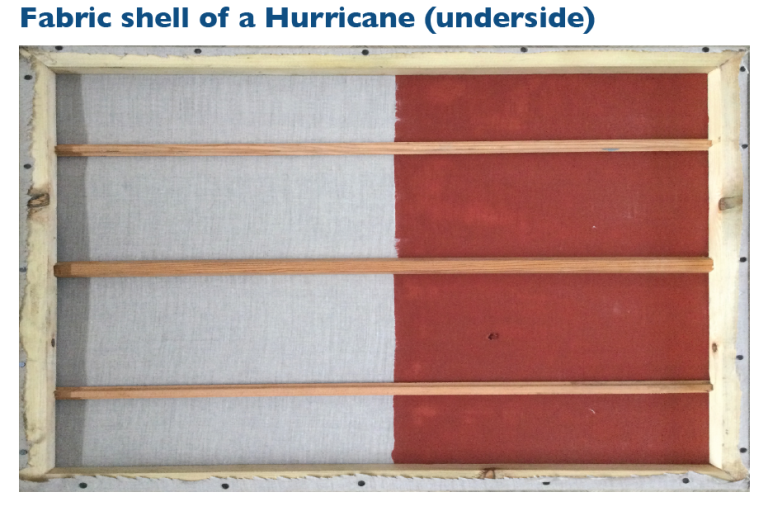
The shell of the Hawker Hurricane was not a single piece of material, but a heavily engineered, multi-layered treatment applied over a structural frame. While the forward section used lightweight metal panels, the rear fuselage (and early production wings) relied on a doped linen aircraft skin applied over wooden formers and stringers.
The exact layers that made up this fabric plane shell from the inside out include:
The Understructure (The Foundation)
Before any fabric was applied, the skeleton had to be prepared:
The Structural Frame: A rigid Warren girder box-frame made of high-tensile steel tubes.
Wooden Formers and Stringers: Lightweight wooden (often spruce) cross-sections and longitudinal strips attached to the steel frame to give the fuselage its rounded, aerodynamic shape.
Anti-Chafe Tape: Heavy-duty tape wrapped around sharp metal or wooden edges to prevent the fabric shell from rubbing and tearing from the inside out.
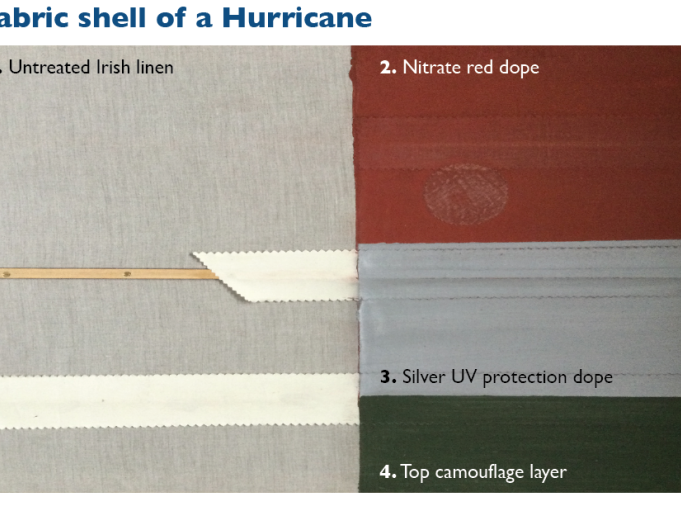
1. The Core Fabric Layer
Irish Linen: A tight, high-grade unbleached linen fabric specifically manufactured for aviation (unlike modern restorations which often use polyester). It was pulled taut across the frame, glued at the perimeters, and mechanically secured.
The Stitching and Reinforcement Layers
Rib Stitching: Heavy cord laced through the linen fabric and wrapped around the internal wooden stringers (or wing ribs) to mechanically bind the skin to the frame. This prevented the air pressure from peeling the fabric away during high-speed dives.
2. Cellulose Nitrate Dope (Primer Layer): The raw linen was brushed or sprayed with clear nitrate dope (a liquid plasticizer). This soaked into the linen fibers to shrink the fabric drum-tight and seal the weave.
Finishing / Pinking Tape: Strips of linen tape with jagged, sawtooth (“pinked”) edges were laid over the rib stitching and seams. These were saturated with more dope to flatten out the profile of the stitches and prevent the wind from fraying the edges.
The Protective and Camouflage Layers
3. Cellulose Butyrate Dope (UV & Fire Protection): To prevent the sun’s ultraviolet rays from rotting the linen and to reduce the flammability of the nitrate dope, multiple layers of butyrate dope infused with aluminum powder were applied. The aluminum acted as a reflective barrier against sunlight.
4. Military Camouflage Paint: Finally, the standard RAF dark green, ocean grey, or duck-egg blue paints were applied over the finalized, weatherproofed skin.